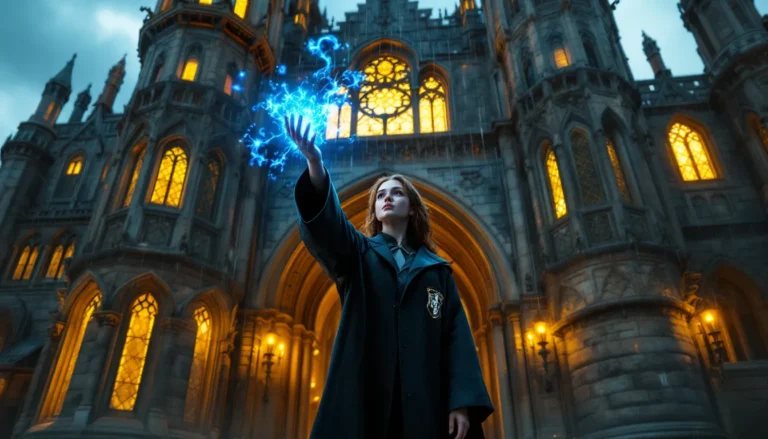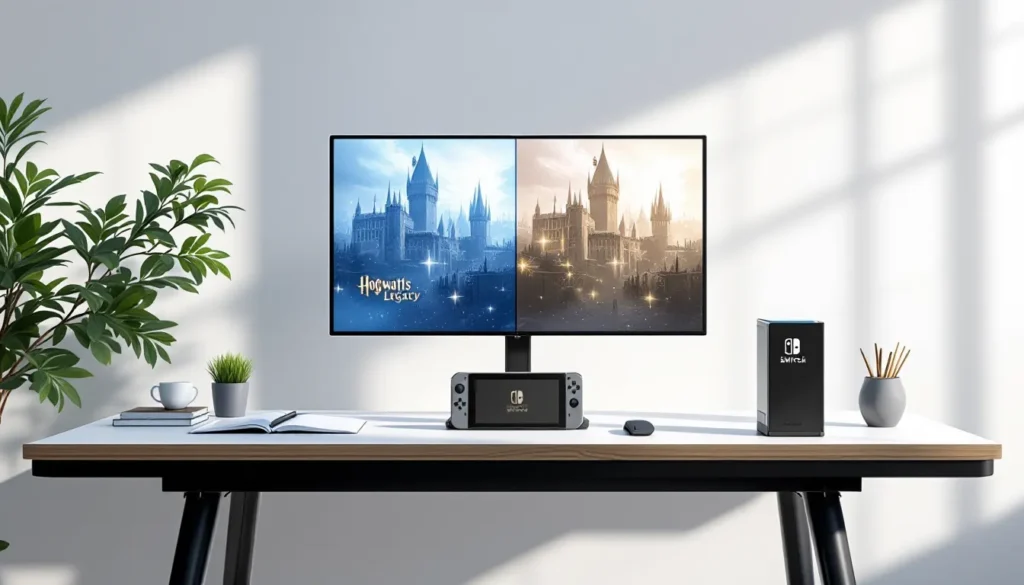
The Nintendo Switch’s handheld magic has captivated millions since 2017, but the upcoming Switch 2 promises a leap forward in both power and capability. With that leap comes a crucial question for Hogwarts Legacy players: will the game actually shine on Nintendo’s next-generation hardware? The original Switch port of Hogwarts Legacy faced real compromises, lower resolution, stuttering frame rates, and loading times that tested patience. Switch 2, with significantly upgraded internals, offers the promise of a vastly improved experience. Whether you’re thinking about upgrading, curious about what changes are coming, or wondering if your save file will survive the jump, this guide breaks down everything you need to know about Hogwarts Legacy on Switch 2 in 2026.
Table of Contents
ToggleKey Takeaways
- Hogwarts Legacy Switch 2 upgrade delivers significantly improved visuals and performance, with resolution jumping to 1080p docked and load times dropping from 15–20 seconds to 5–8 seconds.
- The original Switch version of Hogwarts Legacy ran at 720p docked with aggressive visual compromises like compressed textures and simplified lighting, which Switch 2’s upgraded GPU and memory remove.
- Switch 2’s enhanced hardware specs—including faster processors, triple the RAM, and advanced GPU capabilities—enable the game to run at stable 30 fps with expanded world details and smoother camera controls.
- Save file compatibility between Switch and Switch 2 versions remains officially unannounced, so protect your current progress until Avalanche Software confirms migration options.
- While Switch 2 won’t match PS5 or high-end PC performance in Hogwarts Legacy, the handheld convenience combined with improved 1080p/30 fps performance makes it the best portable experience available.
What is Hogwarts Legacy?
For anyone new to the game, Hogwarts Legacy is an action RPG developed by Avalanche Software that places you in the shoes of a witch or wizard attending Hogwarts School of Witchcraft and Wizardry. Set in the 1800s, roughly a century before Harry Potter’s arrival, the game lets you create your own character and experience the sprawling castle, its many secrets, and the magical world beyond its walls.
The core appeal is straightforward: you’re living out the fantasy of attending Hogwarts. That means learning spells, brewing potions, taming magical beasts, and uncovering ancient mysteries scattered throughout the Forbidden Forest and beyond. The game shipped in February 2023 across PC, PlayStation, Xbox, and eventually the Nintendo Switch, bringing a full-featured RPG experience to a handheld system.
On Switch, the journey from Diagon Alley to the Room of Requirement remained intact, but the visual compromises became immediately apparent. The game demanded optimization tricks to run at all on Nintendo’s aging hardware, and those compromises are exactly what Switch 2 is designed to fix.
The Original Switch Performance and Limitations
Graphics and Visual Downgrades
The Switch version of Hogwarts Legacy was, frankly, a scaled-down experience compared to its siblings on more powerful hardware. Avalanche Software made aggressive cuts to maintain playability: textures were compressed, shadow quality dropped significantly, and environmental details that made the castle feel alive were stripped away. Character models lost definition, and distant objects popped in and out of view more obviously than on other platforms.
Resolution took the biggest hit. On docked mode, Hogwarts Legacy on Switch ran at a native 720p, falling back to 540p in handheld mode. For context, the PS5 and Xbox Series X versions target 4K (or higher). That gap between 720p and 4K is dramatic, the Switch version looked noticeably softer and less detailed. Lighting effects were simplified, reflections vanished from water and floors, and the magical atmosphere that made exploring Hogwarts genuinely enchanting on PC or PlayStation felt diminished.
Frame Rate and Loading Time Issues
Performance stability was another sore spot. The Switch version targeted 30 frames per second rather than the 60 fps available elsewhere. For an action RPG where combat responsiveness matters, 30 fps creates noticeable input lag. Spellcasting felt slightly sluggish compared to other platforms, and exploration wasn’t as buttery smooth when rotating the camera.
Loading times compounded the problem. Transitioning between areas, entering buildings, or fast-traveling could take 15–20 seconds or more. Players got intimately familiar with loading screens. On other platforms, similar transitions happened in 3–5 seconds. For a game built around exploration and discovery, those extended waits broke the flow and wore on patience during marathon sessions.
Switch 2 Hardware: What’s Changed?
Processor and Memory Improvements
The original Switch ran on an NVIDIA Tegra X1 processor paired with 4GB of RAM. That hardware was impressive for 2017 but became noticeably dated as games grew more ambitious. The Switch 2 is rumored to use an upgraded Tegra processor, likely an enhanced ARM-based chip with significantly higher clock speeds and a more modern architecture. Memory is expected to jump to 12GB or possibly higher, a threefold increase that opens doors for handling more complex assets simultaneously.
With those specs, the CPU won’t bottleneck the GPU the way it did on the original Switch. That means more enemies on screen during combat encounters, more detailed NPC schedules running in the background, and the ability to render more of Hogwarts at once without streaming in chunks. The performance ceiling climbs dramatically.
Enhanced GPU Capabilities
The original Switch’s Maxwell-based GPU was a mobile marvel for its time but lacked ray-tracing support and struggled with complex shaders. Switch 2’s GPU is expected to be significantly more powerful, possibly doubling the flops and supporting more advanced rendering techniques. That translates to better shadows, improved draw distances, and the potential for visual effects that simply weren’t feasible before.
Developers will be able to render at higher resolutions without sacrificing performance. Textures can be less compressed. Particle effects from spells won’t drain frame rates. The magical effects that define Hogwarts Legacy, the spell animations, the environmental storytelling through visual detail, can finally shine without compromise.
Hogwarts Legacy Switch 2 Upgrade: Expected Improvements
Higher Resolution and Visual Fidelity
The most obvious upgrade will be resolution. Expect Hogwarts Legacy to run at native 1080p in docked mode on Switch 2, with potential for 720p in handheld, a solid improvement over the 720p/540p split on the original. That alone makes the world feel sharper and more immersive. Textures can be higher-quality because the extra VRAM removes the need for aggressive compression. Lighting can become more sophisticated, casting longer shadows and creating richer atmosphere. The castle hallways will glow with better fidelity, and character faces will show actual emotion rather than blurry approximations.
View distance increases matter too. On the original Switch, fog rolled in aggressively to hide distant terrain and buildings. Switch 2 can push that fog line back, letting players see more of Hogwarts and the open world in a single frame. Exploration becomes more rewarding when you can spot distant towers and plan your route accordingly.
Faster Load Times and Smoother Performance
With a faster processor and an upgraded storage interface, expect load times to drop from 15–20 seconds to somewhere in the 5–8 second range, closer to what other platforms deliver. Fast-traveling to a known area won’t feel like an inconvenience. Entering buildings becomes seamless rather than something you plan around.
Frame rate should stabilize at a locked 30 fps or potentially unlock options for 60 fps in certain areas or with lower resolution. Combat encounters will feel more responsive. Turning the camera while exploring won’t hitch the way it sometimes did on the original hardware. The overall experience becomes less about working around performance limitations and more about enjoying the game as designed.
Expanded World and Game Features
The jump in hardware might enable features that didn’t make it to the Switch port. AI behavior could become more complex, NPCs could have richer daily routines and more dynamic interactions. Draw distance improvements might mean the developers add more environmental storytelling details that were cut for performance. In extreme cases, some Switch 2 versions might even receive gameplay features previously exclusive to PC, PS5, or Xbox, though this largely depends on developer ambition and how much additional work it entails.
Will Your Progress Carry Over?
Cross-Compatibility and Save File Transfer
This is the million-galleon question. As of now, Avalanche Software hasn’t officially announced save file compatibility between Switch and Switch 2 versions of Hogwarts Legacy. But, the precedent is encouraging. When Nintendo released the Switch, games that bridged the original 3DS and Switch generation often allowed save transfers or at least provided methods for players to restart without feeling punished.
Given that Switch 2 is a direct successor running similar architecture (likely the same operating system structure with upgraded hardware), technical barriers to save compatibility are minimal. The game files themselves wouldn’t need to change. It’s more a matter of developer choice and whether Avalanche Software wants to invest in the implementation.
The safest assumption: watch official announcements from Avalanche Software or Nintendo closer to Switch 2’s launch. If you’re deep into a Hogwarts Legacy playthrough on Switch now, don’t panic about restarting, but do keep an eye out for official guidance. Many players may be willing to restart anyway to experience the improved visuals from the beginning. Some players might want to experience their character in a dungeon or storyline they remember with vastly better graphics. The choice won’t be made for you either way.
How to Upgrade Your Game
When Switch 2 launches, upgrading Hogwarts Legacy will depend on Nintendo’s policies and how Avalanche handles the transition.
Scenario 1: Save Transfer (if implemented). Purchase the Switch 2 version, load your existing save file (via cloud backup or direct transfer), and continue from where you left off. No restart, full progression intact.
Scenario 2: Digital Purchase. If you own Hogwarts Legacy digitally on the eShop, Nintendo might offer a direct upgrade path or discount for the Switch 2 version, similar to how some publishers handle next-gen upgrades on console. Check the eShop when Switch 2 releases.
Scenario 3: Physical Disk (if Switch 2 supports it). Original reports suggest Switch 2 may support cartridges similar to the current Switch, though at higher capacity. Your physical Switch version wouldn’t directly work, but Avalanche could release an enhanced cartridge, and many retailers offer trade-in programs.
Scenario 4: Fresh Start. If you just want to play the enhanced version and don’t mind restarting, you simply purchase the upgraded version and begin a new adventure. Given the visual improvements, many players will actually prefer this route, the game will look so much better that experiencing early moments again feels fresh.
The real advice: don’t sell your Switch copy or delete your save file until official migration details are announced. Keep your progress intact and wait for clarity from the publishers.
Comparing Switch 2 Performance With Other Platforms
Switch 2 vs PC, PlayStation 5, and Xbox Series X
Even with its improvements, Switch 2 won’t match the raw power of a high-end gaming PC, PS5, or Xbox Series X. That’s important to understand upfront, it’s not a weakness specific to Switch 2, but rather a reality of handheld vs. stationary console design.
PC (High-End Specs). On a modern gaming PC with a GeForce RTX 4070 or RTX 4080, Hogwarts Legacy runs at 1440p or 4K resolution with 100+ fps, ray-traced lighting, maximum texture quality, and draw distances that dwarf any console version. Switch 2 won’t compete here. For players with high-end rigs, the visual gap will be noticeable.
PlayStation 5 and Xbox Series X. These run Hogwarts Legacy at 4K (or near-4K) with 30 fps locked or an uncapped 60 fps mode at lower resolution (around 1440p). They feature ray-traced shadows and reflections, significantly higher texture quality, and superior draw distances. Switch 2 at 1080p/30 fps with simplified lighting is objectively less impressive, but that’s comparing a $500 stationary console to a $350–400 hybrid handheld.
Switch 2’s Sweet Spot. Where Switch 2 excels is flexibility. You can dock it for a TV experience or play handheld on the go. That mobility trade-off justifies the visual compromise. A locked 1080p/30 fps with solid textures and improved load times is perfectly adequate for a handheld adventure game. It won’t be the “best” version, but it’ll be the most convenient for players who value portability.
Comparison rankings for Hogwarts Legacy, best to least visually impressive:
- High-End PC (4K, ray-tracing, 100+ fps)
- PlayStation 5 / Xbox Series X (4K, 30 fps, or 1440p, 60 fps with ray-tracing)
- Switch 2 (1080p docked, 720p handheld, 30 fps, standard lighting)
- Original Switch (720p docked, 540p handheld, 30 fps, compressed assets)
For players who already own Hogwarts Legacy on another platform, upgrading purely for visuals doesn’t make sense. For exclusive Switch owners or those who value handheld gaming, Switch 2 will deliver the best portable experience the franchise has seen.
Conclusion
The Hogwarts Legacy Switch 2 upgrade represents a meaningful evolution. The original Switch port proved the game’s core experience translated to handheld play, but technical compromises were impossible to ignore. Switch 2’s enhanced hardware, more powerful GPU, additional RAM, faster storage, removes those friction points.
Expect sharper visuals, faster load times, and stable frame rates that make exploration and combat feel responsive. The game will look and run closer to how Avalanche Software originally designed it, even if it can’t match PS5 or high-end PC versions. For players with save files on the original Switch, keep an eye on official announcements about migration, though don’t stress, many players will welcome the excuse to start fresh and witness Hogwarts through upgraded eyes.
For those deciding whether to pick up Hogwarts Legacy on Switch 2: if you own another platform version, you’ve already experienced it. If Switch is your primary gaming device, the enhanced port removes many reasons to feel like you’re settling. The handheld convenience, combined with significantly improved performance and visuals, makes Switch 2 a compelling way to experience magic on the go. The 1800s wizarding world will feel more immersive, more alive, and less like you’re playing a game designed for more powerful hardware.
When Switch 2 releases and Hogwarts Legacy arrives or updates, the payoff for those who waited will be obvious: a handheld port done right.