Fast travel in Hogwarts Legacy comes in many forms, but few feel as magical as mounting your broomstick and soaring toward a landing platform. Whether you’re rushing to complete a house quest or exploring the Forbidden Forest, understanding the landing platforms network is crucial for efficient navigation. This guide maps out every landing platform in the game, reveals hidden locations you might’ve missed, and explains how to use them strategically. From the courtyards of Hogwarts Castle to the rolling hills near Hogsmeade, you’ll discover all landing platform locations and how to unlock them as you progress through your wizarding journey.
Table of Contents
ToggleKey Takeaways
- Landing platforms in Hogwarts Legacy function as fast travel waypoints that unlock progressively as you explore and advance through the game’s story and regions.
- Hogwarts Castle contains the densest concentration of landing platforms, particularly around the main courtyard, Training Grounds, and Astronomy Tower, making them essential hubs for quick missions and navigation.
- The Forbidden Forest and remote areas feature fewer, strategically-placed landing platforms that reward exploration and are positioned near high-level enemy encounters, boss fights, and hidden collectibles.
- Efficient routing between discovered platforms—especially when chaining multiple objectives in one session—saves significant time and allows players to optimize grinding, collection hunting, and quest completion.
- Hidden platforms scattered throughout the game world, including deep forest locations and high-altitude structures, encourage genuine exploration and discovery rather than simply following quest markers.
What Are Landing Platforms in Hogwarts Legacy?
Landing platforms are designated broomstick landing zones scattered across the game world. They serve as fast travel waypoints, allowing you to swoop down safely without crashing into rooftops or trees. Think of them as the game’s equivalent of checkpoints, essential infrastructure for getting around Hogwarts and its surrounding regions.
These platforms vary in size, height, and accessibility depending on their location. Some sit atop towers, others rest in courtyards, and a few are hidden in remote corners of the map. The beauty of landing platforms is that they’re discoverable through exploration: you don’t need to follow a questline to find them all. Once you’re near one, a prompt appears, letting you fast travel there instantly from any other discovered platform.
Landing platforms only unlock as you unlock the areas they’re in. Early game? You’ll have access to platforms around Hogwarts Castle and a couple in Hogsmeade. Push deeper into the game and explore dangerous territories, and hidden platforms open up across the Forbidden Forest and beyond. The system encourages exploration while making backtracking manageable, you won’t spend an hour flying to the same location twice.
Overview of Hogwarts Castle and Surrounding Areas
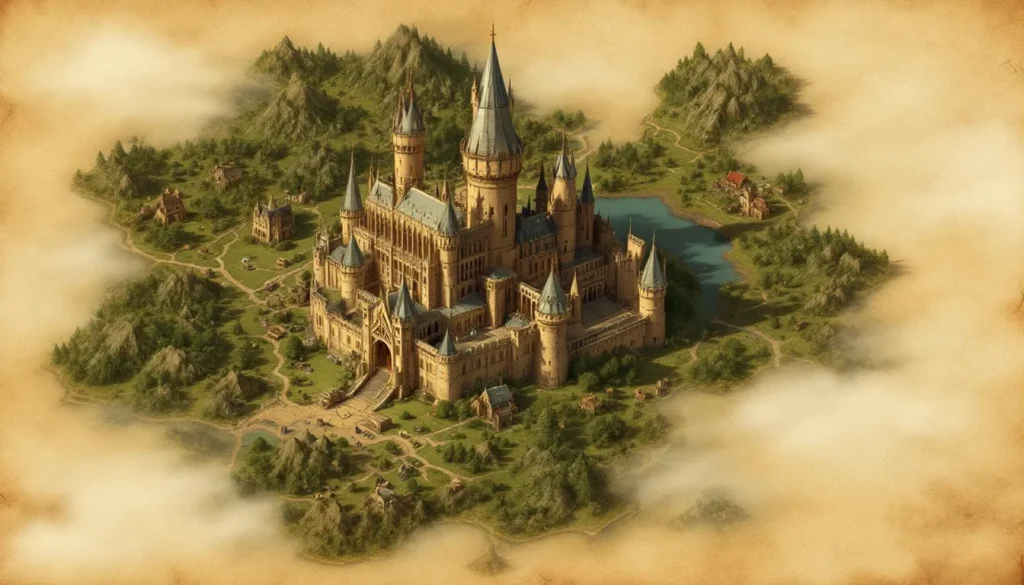
Hogwarts Castle dominates the map, and for good reason. It’s not just a single structure but a sprawling complex with multiple wings, towers, and outdoor spaces. The castle grounds are layered vertically, which makes the landing platform system particularly important here. Trying to navigate between the Transfiguration Courtyard and the Astronomy Tower on foot? You’ll be climbing stairs for days.
The castle’s landing platforms are concentrated in key areas: the main courtyard, defensive towers, rooftops, and specialized training grounds. Each platform corresponds to a notable location within or around the castle, making them logical waypoints. The design respects the Harry Potter lore too, platforms exist where they’d actually make sense in the wizarding world.
Beyond the castle walls, the surrounding grounds stretch toward the Forbidden Forest and Hogsmeade. These transitional areas have their own platforms, creating natural pathways for exploration. The density of platforms decreases as you venture further from the castle, which makes sense from both a game design and immersion perspective. You’re moving from the safety of school into wilder, less-developed territories.
Hogwarts School Grounds Landing Platforms
The school grounds contain the most frequently used landing platforms in the entire game. These are your anchor points for quick missions, daily activities, and house-specific tasks. You’ll return here constantly, so knowing the platform layout is essential for maintaining momentum during gameplay.
The main courtyard platform is typically your first discovery and acts as the central hub. It’s positioned centrally enough that many questlines either begin or end there. Additional platforms dot the training grounds, allowing direct access to practice areas where enemies spawn and level progression happens naturally. Upper castle platforms provide access to tower-based content, including several collection challenges and enemy encounters.
Training Grounds and Quidditch Pitch Platforms
The Training Grounds platform sits near the primary combat arena. This is where you’ll encounter high-concentration enemy spawns, making it ideal for grinding XP when you’re leveling up. The platform itself is elevated but accessible, positioned so that you can immediately engage enemies upon landing.
The Quidditch Pitch platform offers a different vibe entirely. While Quidditch isn’t a playable sport in the traditional sense, the pitch hosts specific content and becomes important during certain questlines. The platform here is located at the field’s edge, giving you clear sightlines to the pitch’s structure. Aesthetically, landing here never gets old, the sweeping vista of the pitch is genuinely stunning.
Both platforms serve functional roles beyond just navigation. They’re positioned where you’d logically need to be, reinforcing the game’s world design. Players frequently alternate between these two when optimizing their farming routes.
Astronomy Tower and Upper Castle Platforms
The Astronomy Tower platform sits at dizzying heights. This isn’t just a fast travel point, it’s a destination in its own right. Several collection challenges are clustered here, including astronomically-themed items (naturally) and secrets hidden in high places. The platform’s elevation means you get spectacular views of the entire castle and surrounding landscape.
Other upper castle platforms provide access to restricted areas, secret passageways, and tower interiors. These aren’t all discovered immediately: several are locked behind progression gates. The Room of Requirement Hogwarts serves as a central hub, but reaching it requires using these distributed platforms strategically.
The upper platforms also offer tactical advantages during combat encounters. If you need breathing room or want to line up aerial attacks, these high-altitude landing zones are your escape route. Some players deliberately trigger combat near an upper platform, then retreat upward to regroup, it’s a viable strategy if you’re overwhelmed by enemies.
Hogsmeade Village Landing Zones
Hogsmeade transitions you from castle life into the broader magical world. The village isn’t massive, but it’s densely packed with NPCs, shops, and quest objectives. Landing platforms here serve dual purposes: they’re transportation hubs and gateways to specific merchant areas.
Unlike the castle’s sprawling vertical design, Hogsmeade’s platforms are more horizontally distributed. You’ll land near shops, taverns, or quest givers, which keeps your objectives streamlined. The village’s compact size means no platform feels redundant, each serves a distinct area.
Key Merchant and Quest Hub Platforms
The central Hogsmeade platform is your primary landing point. It’s positioned near the village square, close to multiple shops and the Floo Powder network hub. How to Use Floo explains the interconnected travel system, which works alongside landing platforms. You can use either method depending on your location and objective.
Other merchant-adjacent platforms place you near specific shops. The Potions shop platform, for instance, drops you within steps of ingredients and finished potions. Similarly, the equipment vendor’s platform is positioned for immediate access to gear upgrades. This design philosophy, placing platforms exactly where you need them, is consistent throughout the village.
Quest hub platforms are equally strategic. If you’ve got house quests or NPC-specific missions in Hogsmeade, the relevant platform gets you there faster than walking. This reduces dead time and keeps you focused on objectives.
Strategic Flying Locations
Beyond the utilitarian platforms, Hogsmeade has a few positioned for pure navigation value. These allow you to approach the village from different angles, which becomes important when exploring adjacent areas. If you’re hopping between the castle grounds and the Forbidden Forest, the outlying Hogsmeade platforms act as convenient midpoints.
Some of these platforms are positioned in areas that would otherwise be slow to traverse. Instead of flying for three minutes across the landscape, you land, reorient yourself, and launch toward your actual destination. It’s efficient pathfinding by the developers, they’ve clearly thought about player flow and minimizing frustration.
Forbidden Forest and Remote Landing Areas
The Forbidden Forest is where Hogwarts Legacy’s exploration truly opens up. These areas are dangerous, visually distinct, and packed with secrets. The landing platforms here are fewer and further between, which is intentional, venturing into the forest should feel like a journey, not a quick jaunt.
Remote platforms in these regions are tied directly to exploration milestones. Discover a new area, clear enemy camps, or complete environmental puzzles, and you’ll unlock a nearby platform. This rewards curiosity and makes the dangerous zones feel rewarding to explore. You’re not just finding loot, you’re expanding your fast travel network.
These platforms are also positioned strategically around high-level enemy encounters and boss fights. After a brutal combat sequence, you want a platform nearby so you can restock and return without excessive backtracking. The game’s developers clearly understood that difficulty spikes should be coupled with accessibility improvements.
Hidden Platforms and Secret Locations
The Forbidden Forest contains several platforms that aren’t immediately obvious. Some are tucked into alcoves, perched on unusual structures, or accessed through puzzle solutions. Finding these requires genuine exploration, flying around, checking every promising rooftop, and talking to NPCs who hint at secret locations.
One particularly well-hidden platform sits deep in the forest, accessible only after completing a series of environmental challenges. Another is tied to a collection challenge that spans the entire region. These discoveries feel earned, which is what makes them memorable. You’re not following a map marker: you’re actually exploring.
Secret platforms often sit near treasure caches or rare enemy encounters. The game uses them as carrots dangling in front of explorer players. “Land here, and you’ll find something worth your time.” Most do, which maintains the consistency of the world design. The developers didn’t hide platforms in terrible locations just for the sake of hiding them.
The High Keep Hogwarts Legacy: region contains particularly valuable hidden platforms, as reaching that area requires precision flying and knowledge of safe landing zones.
Fast Travel and Navigation Tips
Landing platforms are only valuable if you understand how to use them effectively. The fast travel system is intuitive but has depth if you dig into it. Understanding the mechanics and optimizing your routes can save hours over a playthrough.
First, the basics: open your map, select any discovered platform, and confirm. You’ll fast travel instantly if you’re not in combat. The system works from anywhere on the map, not just at platforms themselves. This means you can plan routes while mid-flight, landing as soon as a platform becomes relevant to your next objective.
Prioritize discovering all platforms early. Some early-game areas have platforms you’ll pass without noticing. Make a habit of flying to unexplored areas, checking for platform prompts, and documenting them mentally. A 10-minute detour now saves frustration later when you’re speed-running between objectives.
Optimizing Your Broomstick Routes
Your broomstick is your primary travel tool. Understanding flight mechanics makes platform use more effective. You can steer mid-flight, adjust altitude, and even perform tricks (though tricks don’t affect navigation). The real skill is planning your route before launching.
If you’re heading to multiple objectives in one session, plot the most efficient path between platforms. Don’t just teleport to the nearest one, think about which platform puts you closest to all remaining objectives. This is particularly important in late-game when you’ve got multiple house quests, collection challenges, and enemy encounters across different regions.
Use intermediate platforms as stepping stones. Instead of one long flight from the castle to the deep forest, landing at intermediate platforms breaks up the journey and gives you orientation checkpoints. It’s slower in terms of fast travel count, but faster in real time because you’re not getting lost mid-flight.
Unlocking and Discovering New Platforms
Platforms unlock progressively as areas become accessible. Early in the game, you’ll only have platforms within Hogwarts Castle and immediate surroundings. Completing main story quests opens new regions, which each come with their own platforms.
Side exploration accelerates platform discovery. Fly around unknown territory, land on unusual structures, and check your surroundings. The prompt “Press [Button] to use landing platform” appears when you’re near one. Some platforms require you to land manually using the normal landing mechanics first, they don’t activate instantly.
Collecting all platforms isn’t mandatory for progression, but it’s incredibly useful. Completionists should make platform discovery a priority during exploration phases. Mark them on your mental map, and you’ll develop an intuitive understanding of the world’s layout.
The Gryffindor Common Room Hogwarts guide mentions several house-specific objectives that benefit from nearby platforms. Planning your house quests around platform locations can significantly speed up progression.
Platform-Specific Quests and Activities
Landing platforms aren’t just transit nodes, they’re activity hubs. Specific content clusters around platforms, making them destinations in their own right. Understanding what’s available at each platform transforms them from simple waypoints into strategic objectives.
Many platforms are surrounded by collection items. Flying to a platform, landing, and spending two minutes collecting nearby items is far more efficient than searching the landscape without guidance. The platforms essentially point you toward content-rich areas.
Enemy encounters often spawn near platforms. Developers cluster challenging fights in specific zones, and platforms provide safe entry and exit points. You can land, engage enemies, retreat if necessary, and fly out once they’re cleared. This makes grinding and combat challenges accessible without requiring perfect navigation skills.
Collection Items and Challenges at Landing Zones
Each major platform region contains specific collectibles: field guide entries, equipment pieces, spell books, or cosmetic items. These aren’t randomly distributed, they’re intentionally placed to reward exploration at platform areas.
For example, the Astronomy Tower platform has multiple collection challenges within easy reach. The Quidditch Pitch platform is surrounded by secrets tied to the sports theme. Connecting platforms to specific collection types helps you plan farming runs efficiently.
Some collection challenges can only be completed from specific platforms. A puzzle might require you to approach from a particular angle, line up your broomstick correctly, or land on a narrow structure. These aren’t common, but they exist, and platforms enable them. Attempting collection challenges at the wrong platform might leave you frustrated, accessing them from the correct landing point makes them trivial.
Difficulty tiers exist within collections too. Easy items sit right next to platforms, visible on approach. Harder ones require navigation skills or platform hopping between multiple zones. Advanced players can chain platform jumps to tackle difficult collections efficiently.
NPC Encounters and World Events
NPCs frequent platform areas. Visiting a platform might trigger an encounter with a student NPC, a house ghost, or a notable character. Some NPCs only appear at specific platforms, making them reliable waypoints if you’re trying to complete NPC-specific quests.
World events occasionally tie to platforms. During certain quests, you might receive instructions to “meet at [Platform Name].” Fast travel systems make these objectives trivial, you’re not spending 15 minutes flying around trying to find the meeting spot.
Seasonal events and limited-time content might activate near specific platforms. Knowing the platform layout helps you react quickly to time-limited opportunities. If a seasonal event activates in the forest, having memorized the relevant platforms means you can participate immediately.
Advanced Landing Platform Strategy
Once you understand basic platform usage, strategic thinking elevates your gameplay. Advanced players use platforms not just for travel but for planning entire play sessions around platform proximity and content density.
Create mental maps of platform clusters. The castle has dense clusters in multiple regions. Hogsmeade is concentrated in the village center. The forest has sparse, spread-out platforms. Understanding these patterns helps you predict where objectives will cluster and which platforms minimize travel time.
Advanced strategy also involves sequencing. If you’ve got five objectives scattered across the map, plotting your platform route before launching saves decision-making time mid-game. You’re batching travel instead of constantly recalculating paths.
Platform accessibility changes with progression. Early game, you might not be able to reach higher platforms due to enemy density or story gates. Late game, those same platforms become trivial waypoints. Plan your full playthrough around when specific platforms become accessible, and you’ll optimize your efficiency dramatically.
Best Platforms for Grinding and Leveling
Grinding is most efficient when you’re near high-concentration enemy spawns. Specific platforms are positioned exactly for this purpose. The Training Grounds platform, for instance, drops you in the center of a prime leveling zone. Enemies respawn regularly, and you can use the platform as your respawn point if things go sideways.
Other platforms sit near lower-level enemies, useful when you’re building specific spell loadouts or practicing new mechanics. Platform selection directly impacts grinding efficiency, land at a good platform, and enemies fall in waves. Land at a poor one, and you’re wasting time traveling between scattered encounters.
Rotation patterns develop naturally around platform clusters. You’ll land at one platform, clear nearby enemies, fast travel to the adjacent platform, clear again, and repeat. This creates a loop that maximizes XP per time investment. Once you’ve memorized good grinding routes, you can level significantly faster than casual players.
Combat Arenas and Enemy Encounters
Boss fights and major enemy encounters are positioned relative to specific platforms. Developers ensure you have access points that don’t force you to traverse irrelevant content to reach important fights. Before a major encounter, check nearby platforms, they’re your safe zones.
Some boss fights reward tactical platform usage. You might need to approach from a specific angle or retreat to a particular platform between phases. Learning platform locations near bosses is as important as learning boss patterns. Game8 maintains detailed boss guides that often mention optimal platform usage for specific encounters.
Difficulty spikes are always coupled with platform accessibility. If you’re struggling, a nearby platform offers respite. Fast travel away, restock potions, respec your loadout if necessary, and return fresh. The game never traps you in a difficult area without an escape route.
Conclusion
Landing platforms are far more than fast travel mechanics, they’re the scaffolding that holds Hogwarts Legacy’s world together. From the castle’s towering heights to the Forbidden Forest’s hidden corners, every platform serves a purpose. They reward exploration, enable efficient routing, and make the sprawling world feel manageable.
Mastering platform navigation separates casual players from efficient ones. You’ll spend less time flying aimlessly, complete objectives faster, and discover secrets more systematically. The investment in learning platform locations pays dividends throughout your entire playthrough.
Whether you’re grinding XP, hunting collections, or tackling main story quests, understanding all landing platform locations positions you for success. Explore methodically, document platforms as you discover them, and you’ll transform yourself from navigating blindly to moving with purpose. The magical world of Hogwarts Legacy becomes exponentially more enjoyable when you’re not constantly lost, and that’s what landing platforms provide: direction, efficiency, and magic.